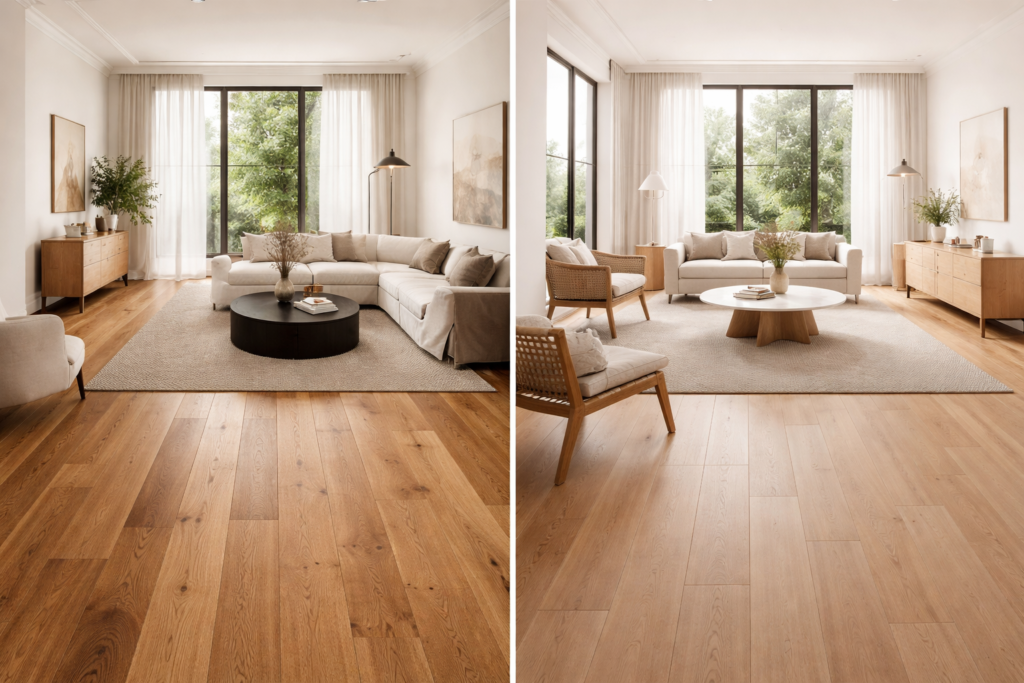
When it comes to flooring, two options dominate almost every homeowner’s shortlist – solid hardwood and engineered wood. Both look stunning. Both add real value to a home. But underneath that beautiful surface, they are very different products built for very different purposes.
Choosing the wrong one can cost you thousands of dollars in repairs down the line. Choosing the right one? It can last a lifetime.
In this guide, we break down everything you need to know about hardwood vs. engineered flooring – from how they’re made and how they feel underfoot, to cost, installation, moisture resistance, and long-term durability. By the end, you’ll know exactly which floor belongs in your home.
What Is Solid Hardwood Flooring?
Solid hardwood flooring is exactly what it sounds like – a single, solid piece of natural wood milled from top to bottom. Each plank is cut from one species of tree, whether that’s oak, walnut, maple, cherry, or hickory, and it carries all the character and warmth that only real wood can offer.
Solid hardwood has been used in homes for centuries. There’s a reason it never goes out of style.
Key Characteristics of Solid Hardwood
- Made from 100% natural wood – no layers, no composites
- Typically 3/4 inch thick
- Can be sanded and refinished multiple times over its lifetime
- Available in a wide variety of wood species, stains, and finishes
- Adds significant resale value to any home
- Develops a natural patina and character over time
At Rioni Wood Products, our solid hardwood flooring is crafted with over 30 years of expertise. Every plank is selected for its grain pattern, strength, and beauty – whether you’re going for a classic look or something more ornamental.
What Is Engineered Wood Flooring?
Engineered flooring is built differently. It consists of a real wood veneer layer on top – usually 2mm to 6mm thick – bonded over multiple layers of plywood or high-density fiberboard (HDF). The result is a floor that looks identical to real hardwood on the surface but is structurally more stable thanks to that cross-layered core.
Engineered wood was developed specifically to solve the biggest weakness of solid hardwood – its reaction to moisture and temperature changes.
Key Characteristics of Engineered Wood Flooring
- Top veneer of real wood over a multi-ply core
- More dimensionally stable than solid hardwood
- Better suited for moisture-prone areas like basements and kitchens
- Can be installed over radiant heating systems
- Lighter and easier to install – including as a floating floor
- Can be refinished 1 to 3 times depending on veneer thickness
Hardwood vs. Engineered Flooring – A Side-by-Side Comparison
Let’s get into the real differences that matter when you’re making a buying decision.
1. Appearance and Authenticity
Solid Hardwood – There is no substitute for the real thing. The depth, warmth, and character of solid hardwood is unmatched. Each plank is unique, with natural grain variations that give your floor a one-of-a-kind look. Over time, it develops a beautiful patina that only adds to its charm.
Engineered Wood – From a visual standpoint, high-quality engineered flooring is almost indistinguishable from solid hardwood. The real wood veneer on top looks and feels genuine. However, it lacks the depth and natural aging quality that solid hardwood develops over decades.
Winner – Appearance: Solid hardwood, for its authenticity and long-term character.
2. Durability and Lifespan
Solid Hardwood – With proper care, solid hardwood floors can last 50, 75, even 100+ years. Because the plank is solid wood all the way through, it can be sanded and refinished many times – removing scratches, stains, and wear without replacing the floor entirely. Our hardwood floor medallions and ornamental flooring are built to be heirloom-quality pieces that last generations.
Engineered Wood – Engineered flooring is durable and suitable for everyday use, but its lifespan depends heavily on the veneer thickness. Thicker veneers (4mm–6mm) allow 2–3 refinishes. Thinner veneers may only tolerate one light sanding – or none at all. Typical lifespan ranges from 20 to 30 years.
Winner – Durability: Solid hardwood for long-term investment value.
3. Moisture and Temperature Resistance
This is where the two diverge most significantly.
Solid Hardwood – Natural wood expands and contracts with humidity and temperature changes. In high-moisture areas like bathrooms, basements, or over radiant heating systems, solid hardwood can warp, cup, or gap if not properly maintained. It performs best in climate-controlled spaces.
Engineered Wood – The cross-ply construction makes engineered flooring far more resistant to moisture and temperature swings. It’s the preferred choice for:
- Basements and below-grade installations
- Kitchens and laundry rooms
- Homes in humid climates
- Floors installed over radiant heating
Winner – Moisture Resistance: Engineered wood flooring, without question.
4. Installation Methods
Solid Hardwood – Solid hardwood must be nailed or stapled down to a wood subfloor. It requires professional installation in most cases. It also needs an acclimatization period of 3–7 days in your home before installation to adjust to the local humidity levels.
Engineered Wood – Engineered flooring offers more flexibility. It can be:
- Glued down
- Nailed or stapled
- Floated (click-lock system, no adhesive required)
This makes it easier to install over concrete slabs, existing tile, or as a DIY project for experienced homeowners. Check out our complete guide on hardwood floor installation for detailed steps.
Winner – Installation Flexibility: Engineered wood flooring.
5. Cost Comparison
Cost is one of the most important factors for most homeowners. Here’s a realistic breakdown:
Solid Hardwood Flooring Cost:
- Materials – $5 to $15 per square foot (depending on wood species)
- Installation – $3 to $8 per square foot
- Total installed cost – $8 to $23 per square foot
Engineered Wood Flooring Cost:
- Materials – $3 to $12 per square foot
- Installation – $2 to $5 per square foot
- Total installed cost – $5 to $17 per square foot
While solid hardwood costs more upfront, its much longer lifespan and ability to be refinished multiple times means the cost-per-year over a lifetime can actually be lower than engineered wood.
For custom work like parquet patterns, hardwood borders, or ornamental medallions, pricing varies based on design complexity and wood species. Get in touch with our team for a free quote.
Winner – Upfront Cost: Engineered wood flooring. Winner – Long-Term Value: Solid hardwood.
6. Refinishing and Maintenance
Solid Hardwood – Can be sanded and refinished 5 to 8 times over its lifetime, making it one of the most low-maintenance investments in the long run. Scratches, dents, and discoloration can all be corrected without replacing the floor.
Engineered Wood – Refinishing is possible but limited. Thick-veneer engineered floors can handle 1–3 refinishes. Once the veneer wears down, the floor must be replaced entirely.
For day-to-day care, both types require:
- Regular sweeping or vacuuming to remove dirt and grit
- Damp mopping with a wood-safe cleaner (avoid soaking the floor)
- Placing felt pads under furniture legs
- Avoiding direct sunlight exposure for extended periods
- Maintaining indoor humidity between 35% and 55%
Winner – Refinishing: Solid hardwood.
7. Environmental Impact
Both options can be eco-friendly when sourced responsibly. Look for flooring certified by the Forest Stewardship Council (FSC) – it means the wood comes from sustainably managed forests.
Solid Hardwood – Uses more raw wood material per plank. However, its extraordinary lifespan means fewer replacements and less waste over time.
Engineered Wood – Uses less solid wood overall since only the top veneer is natural wood. The plywood core can be made from fast-growing tree species, making it a resource-efficient option.
Winner – Sustainability: Slight edge to engineered wood for resource efficiency, but both are solid choices when FSC-certified.
Which Rooms Are Best Suited for Each Type?
Choosing between solid hardwood and engineered flooring often comes down to where in your home you’re installing it.
Best Rooms for Solid Hardwood Flooring
- Living rooms and dining rooms
- Bedrooms
- Home offices
- Hallways and staircases
- Above-grade areas with controlled humidity
Best Rooms for Engineered Wood Flooring
- Basements and below-grade rooms
- Kitchens
- Mudrooms and laundry rooms
- Homes in humid or coastal climates
- Over radiant floor heating systems
What About Ornamental and Custom Hardwood Flooring?
If you’re looking for something beyond standard planks, both solid hardwood and engineered wood can be crafted into stunning ornamental designs. At Rioni Wood Products, we specialize in:
- Parquet flooring – Classic geometric patterns like herringbone, chevron, and basket weave
- Hardwood medallions – Custom inlay centerpieces that become the focal point of any room
- Hardwood borders – Elegant frame-like accents that define spaces and add architectural detail
- Custom CNC woodwork – Precision-cut patterns and designs unique to your home
Our ornamental hardwood flooring is available in both solid and engineered construction – giving you the design freedom you want with the practical performance your space requires.
Solid Hardwood vs. Engineered Flooring – Quick Summary Table
| Feature | Solid Hardwood | Engineered Wood |
|---|---|---|
| Material | 100% natural wood | Real wood veneer + plywood core |
| Lifespan | 50–100+ years | 20–30 years |
| Moisture Resistance | Low | High |
| Refinishing | 5–8 times | 1–3 times |
| Installation | Nail/staple only | Glue, nail, or float |
| Cost (per sq ft) | $8–$23 installed | $5–$17 installed |
| Best For | Living areas, bedrooms | Basements, kitchens, radiant heat |
| Resale Value | Very high | Moderate to high |
So – Hardwood or Engineered? Here’s Our Honest Recommendation
There’s no universal right answer. The best flooring is the one that fits your home, your lifestyle, and your budget.
Choose solid hardwood if:
- You want a floor that will last 50+ years and improve with age
- You’re installing in a living room, bedroom, or above-grade area
- You value the authenticity and resale value of real wood
- You want the ability to sand and refinish multiple times
Choose engineered wood if:
- You’re installing in a basement, kitchen, or high-moisture area
- You have radiant floor heating
- You want a faster, more flexible installation process
- Your budget is tighter but you still want the beauty of real wood
Still unsure? Our team at Rioni Wood Products has been helping homeowners and designers choose the perfect flooring for over 30 years. Whether you’re looking for classic solid hardwood, custom parquet patterns, or stunning ornamental inlays – we’re here to help you get it right.
Contact us today for a free consultation and quote.
Frequently Asked Questions
Is engineered hardwood real wood?
Yes – engineered hardwood has a genuine real wood veneer on top. It is not laminate or vinyl. The surface you walk on and see is authentic wood.
Does engineered flooring add home value like hardwood?
Engineered flooring does add value, but solid hardwood typically commands a higher premium with buyers and appraisers, especially in upscale markets.
Can you install hardwood flooring over concrete?
Solid hardwood is not recommended over concrete due to moisture concerns. Engineered hardwood is the better choice for concrete subfloors.
How long does engineered wood flooring last?
With proper care, quality engineered wood flooring typically lasts 20 to 30 years. Thicker veneer products may last longer and allow additional refinishing.
What is the most durable hardwood species for flooring?
Hickory, hard maple, and white oak are among the most durable species for hardwood flooring. Oak remains the most popular choice for its balance of hardness, beauty, and availability.
Leave a Reply